
If you searched for a remote rocketship scam warning, the short answer is this: Remote Rocketship appears to be a real remote job board, not something you should automatically dismiss as a scam. The warning is more practical than dramatic. In 2026, job seekers need to be careful with individual listings, recruiter behavior, paywalled access, and application hygiene.
A legitimate job platform can still contain risky, stale, low-quality, duplicated, or AI-scraped job listings. Treat Remote Rocketship as a discovery tool, not as proof that every job is safe.
Official website · Latest pricing & offers
What the 2026 Remote Rocketship scam warning actually means
The remote rocketship scam warning is best understood as a caution label, not a verdict. People are not only asking whether Remote Rocketship exists; they are asking whether the jobs they find there are worth trusting.
That distinction matters. A real job board can aggregate listings from many sources, but the safety of your application still depends on the actual employer, recruiter, domain, and application process.
Why people are searching this now
Remote work remains a target for scammers because job seekers are often applying quickly, sharing resumes widely, and communicating with recruiters they have never met. That creates an opening for fake roles, copycat companies, and “too easy” remote jobs.
Searches like remote rocketship scam warning reddit, “is Remote Rocketship legit,” and “remote job board scam” usually come from people who saw a listing, hit a paywall, or found mixed opinions online. They want to know whether they should proceed, pause, or avoid the platform entirely.
Legit platform vs. unsafe job listing
The practical answer is that Remote Rocketship may be legitimate as a platform while some listings still require caution. This is true for many remote job boards, especially those that aggregate roles from across the internet.
A safe-looking listing can become risky if the employer identity is vague, the application link points to a strange domain, or the recruiter asks for sensitive information too early. The remote rocketship scam warning is mostly about these listing-level risks.
What the current SERP sentiment suggests
Current search results and third-party commentary appear mixed or cautious rather than uniformly negative. Some pages describe Remote Rocketship as a legitimate remote job board, while others raise questions about paywalling, trust signals, and whether some roles may be scraped or not fully verified.
Third-party review pages and remote rocketship trustpilot sentiment also appear cautious or mixed from what is visible in search results. That does not prove fraud. It simply means job seekers should avoid treating the platform’s presence alone as a quality guarantee.
Is Remote Rocketship legit in 2026?
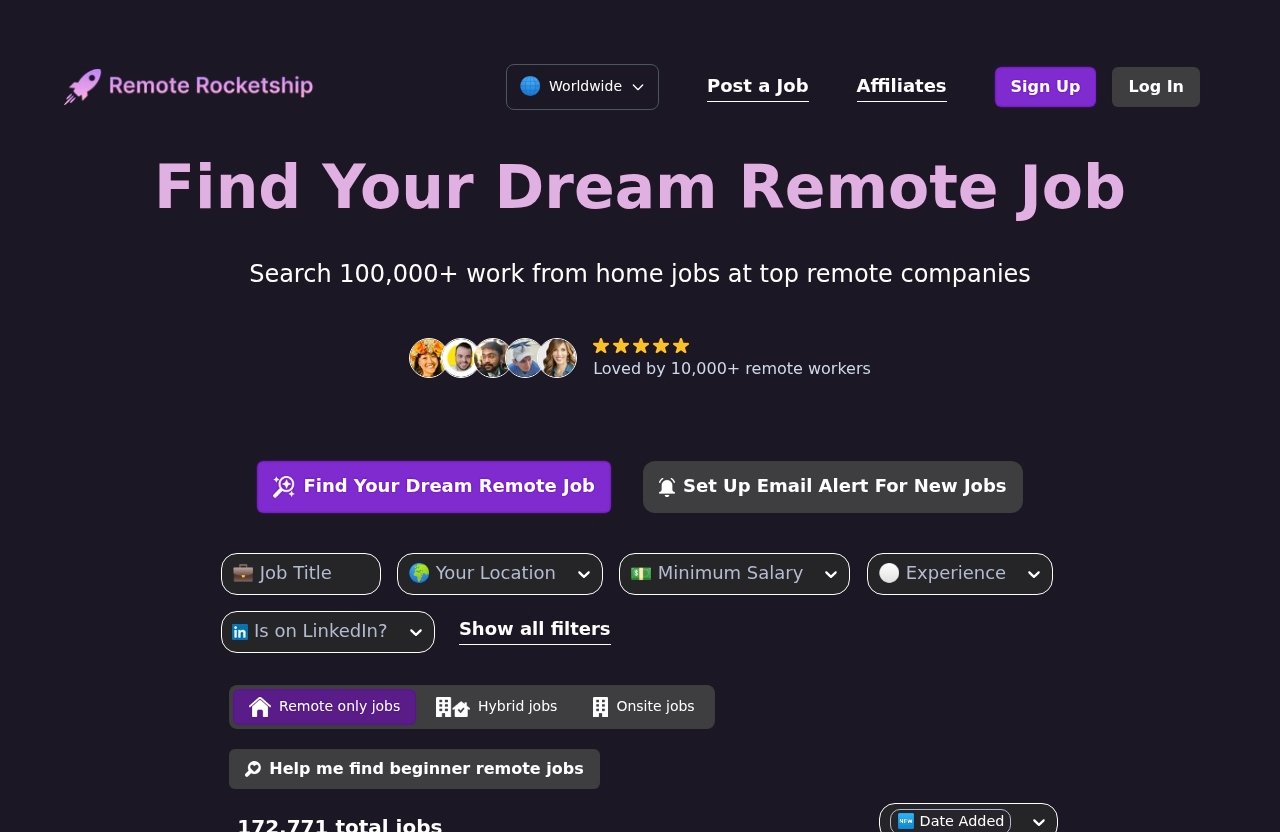
The balanced answer is yes, Remote Rocketship appears to be a real remote job board in 2026. But the remote rocketship scam warning still matters because legitimacy at the platform level does not remove the need to verify every employer.
For job seekers, the smarter question is not only “Is Remote Rocketship legit?” It is “Can I safely confirm that this specific job, company, recruiter, and application link are real?”
What the official site says
Remote Rocketship presents itself as a remote job board that helps users find remote jobs. However, the official homepage and pricing page content available from the provided source did not expose readable pricing or detailed feature information because both pages showed a security verification or CAPTCHA screen.
That means this article does not rely on the official pages for specific pricing, plan names, feature claims, or free-trial details. If you see those details elsewhere, treat them as third-party information unless you can verify them directly on Remote Rocketship’s own site.
What reviewers and SERP results say
Review-style search results generally describe Remote Rocketship as a remote job aggregation platform. Some mention concerns around paid access, limited transparency before subscribing, and the possibility of AI-scraped job listings.
Those observations are worth considering, but they should not be exaggerated. SERP snippets and third-party reviews are signals, not courtroom evidence. The best approach is to combine them with your own verification process before applying.
Where the trust concerns come from
Most trust concerns seem to come from three areas: the paywall, uncertainty about listing verification, and mixed user sentiment on forums or review sites. People naturally become cautious when they cannot inspect enough job details before paying or when listings appear similar to roles found elsewhere.
This is where the remote rocketship scam warning becomes useful. It reminds you not to confuse a paid job board with a fully vetted employer network. Paid access can be legitimate, but it is not the same thing as scam protection.
When you should avoid applying through a Remote Rocketship listing
You do not need to avoid every listing on Remote Rocketship. But you should know when to stop, verify, or walk away.
A good rule: if you cannot clearly identify the employer, confirm the role on another source, and understand where your application is going, do not proceed.
The listing lacks a real employer website
Avoid a listing if the company name is vague, generic, or missing. Examples include “fast-growing startup,” “global hiring team,” or “remote admin company” with no legal business name.
You should be able to find an official employer website, a careers page, a LinkedIn company profile, and some consistent public footprint. If a Remote Rocketship listing does not give you enough to verify the employer, treat it as a remote job red flags situation.
Application goes to a suspicious form or messenger
Be cautious if the Apply link sends you to an unrelated form, a shortened URL, a personal Google Form, Telegram, WhatsApp, Signal, or a random scheduling page with no employer branding. Some legitimate small companies use simple tools, but scammers do too.
A real hiring process usually points to the company’s own careers page, an applicant tracking system, or a recognizable recruiting platform. If the destination domain does not match the employer, pause.
The posting contains salary, role, or location inconsistencies
Inconsistent listings are another reason the remote rocketship scam warning exists. Watch for a job that says “worldwide remote” in one place but “US only” elsewhere, or “entry-level assistant” with senior-level responsibilities.
Also compare the salary with market norms. A role offering unusually high pay for minimal skill, no interview rigor, and instant hiring should make you slow down.
The job asks for sensitive personal or financial data too early
Never provide your Social Security number, bank account details, tax forms, passport scans, crypto wallet information, or direct deposit details before you have verified the employer and received a real written offer.
You may eventually need tax or payroll forms for a legitimate job. The timing matters. Early requests for sensitive information are a major remote job scam warning sign.
Red flags in remote job postings to watch for in 2026
Remote hiring has improved, but scams have also become more polished. Some fake postings now copy real company branding, use AI-written job descriptions, and imitate recruiter language.
Use this remote rocketship scam warning section as a practical filter before you apply to any remote role, whether you found it on Remote Rocketship or somewhere else.
Too-good-to-be-true pay
Be skeptical of compensation that sits far above market for very little experience. Examples include “$45 per hour data entry, no experience required,” “$120,000 virtual assistant role,” or “instant remote job with weekly bonuses.”
High-paying remote jobs exist, but they usually require specific skills, experience, interviews, and a clear employer. If the pay is excellent but the job description is vague, verify carefully.
Urgency and pressure tactics
Scammers often create artificial urgency. Phrases like “start today,” “limited slots,” “respond within one hour,” or “we are hiring immediately with no interview” are warning signs.
Real employers may move fast, but they rarely pressure candidates to skip verification. If a recruiter becomes pushy when you ask basic questions, that is a reason to stop.
Unprofessional email domains
A recruiter claiming to work for a known company should usually email from that company’s domain. For example, a real recruiter for “ExampleCo” would generally not use examplecojobs@gmail.com or exampleco-hr-careers.com without clear verification.
Look closely for mismatched company domains, extra hyphens, misspellings, or fake subdomains. This is one of the simplest checks in any remote job red flags review.
Fake interview or onboarding processes
A suspicious process might include a text-only interview on a messaging app, no video or phone call, instant offer letters, or a request to buy equipment from a specific vendor. Another common pattern is a fake check sent to “purchase office supplies.”
Legitimate onboarding happens after identity verification, signed offer documents, and formal HR contact. If onboarding starts before a real interview, the process is backwards.
Requests to move off-platform quickly
Be careful when a recruiter immediately asks you to leave the job board and continue only through WhatsApp, Telegram, Signal, or personal email. Off-platform messaging is not always fraudulent, but it reduces traceability.
Before clicking Apply, use this mini checklist:
| Before You Apply | What To Check |
|---|---|
| Employer identity | Can you find the company website and LinkedIn page? |
| Domain match | Does the application link match the employer or a known ATS? |
| Role consistency | Does the title, salary, and location match other sources? |
| Recruiter identity | Can you verify the recruiter’s profile and company connection? |
| Data safety | Are they asking for SSN, banking, tax, crypto, or fees too early? |
| Pressure level | Are they rushing you or discouraging questions? |
If two or more answers feel wrong, pause and verify before applying.
Official website · Latest pricing & offers
How to safely apply to jobs found on Remote Rocketship
Safe remote job applications are not complicated, but they do require a repeatable process. The goal is to use Remote Rocketship for discovery while confirming the employer through independent sources.
This is the best way to respond to a remote rocketship scam warning without missing legitimate opportunities.
Verify the company independently
Start by searching the company name outside the job board. Look for the official website, LinkedIn company page, recent activity, leadership team, and normal business presence.
If the company has almost no footprint, uses a very generic name, or appears only in copied job listings, be careful. Some early-stage companies have limited visibility, but they should still be able to explain who they are.
Cross-check the role on the company careers page
Next, go directly to the employer’s official careers page. Search for the exact job title and compare the description, location, salary range, and application URL.
If the job appears on Remote Rocketship but not on the company’s site, that does not automatically mean it is fake. It may be expired, syndicated, or posted through a recruiting partner. Still, you should verify before submitting personal information.
Research the recruiter and domain
If a recruiter contacts you, check their LinkedIn profile, work history, and connection to the company. Be cautious with brand-new profiles, no photo, no company activity, or profiles that do not match the email domain.
Inspect the email address carefully. A message from careers@company.com is very different from companycareers.hr@gmail.com or company-jobs.co when the real domain is company.com.
Use a job-application safety checklist
Follow this simple process before submitting an application:
- Find the employer’s official website.
- Confirm the role on the official careers page when possible.
- Compare the listing with at least one other source, such as LinkedIn, Indeed, Wellfound, FlexJobs, or the company’s own site.
- Verify the recruiter’s identity and company connection.
- Inspect every domain and email address for mismatches.
- Never pay to apply, buy equipment, or unlock a job offer.
- Never share banking, tax, passport, or SSN details early.
- Save screenshots or records of suspicious messages.
This workflow is useful for any remote board, not just Remote Rocketship. It also helps you separate normal hiring friction from actual risk.
Report suspicious listings
If you find a suspicious listing, report it to the platform and avoid further contact. Also consider reporting phishing pages to your browser, email provider, or relevant consumer protection authority in your country.
Do not argue with suspicious recruiters or send more information to “test” them. Once the process feels unsafe, disengage.
What the paywall and platform model mean for job seekers
The paywall is one of the reasons people search for is remote rocketship free, remote rocketship worth it, and remote rocketship scam warning. Paying for job access can feel uncomfortable if you cannot fully inspect the platform first.
A paywall does not prove a scam. But it does mean you should judge value carefully before spending money.
Free browsing vs. paid access
Based on third-party SERP review coverage, Remote Rocketship appears to offer some level of free browsing while fuller access may be paywalled. However, because the official homepage and pricing page available from the provided source showed only a security verification screen, this article cannot verify specific pricing, trial terms, or plan details from official pages.
If you are considering paying, check the current pricing directly on Remote Rocketship and read the refund, cancellation, and billing terms before subscribing.
Why paywalled boards can still be useful
A paid job board can be useful if it saves time, organizes listings well, or surfaces roles you might not find quickly elsewhere. Many job seekers are willing to pay for convenience.
But a paywall is not the same thing as employer verification. You should still assume each listing needs its own review, especially if it appears aggregated or scraped from another source.
How to judge value without overtrusting the platform
Ask yourself these questions before paying:
| Question | Why It Matters |
|---|---|
| Can I preview enough listings? | You need to know whether jobs match your field and location. |
| Are employers clearly named? | Vague listings are harder to verify. |
| Are application links transparent? | You should know where your data goes. |
| Can I cancel easily? | Billing clarity matters. |
| Are the same jobs available free elsewhere? | Compare before paying. |
If you decide to use Remote Rocketship, treat it as one source in a broader search strategy. Do not rely on it alone.
Remote Rocketship alternatives if you want safer browsing
No job board is perfect. The safest approach is to compare listings across multiple sources and apply through verified employer pages whenever possible.
That does not mean avoiding Remote Rocketship. It means building a search process that is harder for bad listings to slip through.
Free remote job boards
Free boards can help you compare whether a role exists elsewhere. Examples include company career pages, LinkedIn Jobs, Indeed, Google Jobs, Wellfound for startups, and niche remote job boards.
Free access does not guarantee safety either. Many scams appear on large platforms, so the same verification rules apply.
Employer-verified boards
Some job seekers prefer boards that emphasize employer screening, paid employer postings, or curated listings. These may reduce noise, but they still cannot remove every risk.
If you use a curated board, confirm whether it verifies employers, manually reviews posts, or simply aggregates listings. “Curated” and “verified” are not always the same thing.
When to use multiple sources
Use multiple sources when a listing looks attractive, pays unusually well, or asks you to apply outside a familiar system. If the job is real, you can usually find supporting evidence somewhere else.
A smart workflow is to discover jobs on one board, confirm them on the employer’s site, then apply through the most official path available. That is the safest response to any remote rocketship scam warning.
Final verdict: should you trust Remote Rocketship in 2026?
The final verdict is balanced: Remote Rocketship appears to be a legitimate remote job board, but you should not blindly trust every listing. The remote rocketship scam warning is mainly about cautious browsing, employer verification, and protecting your personal information.
If you use the site, use it as a job discovery tool rather than a final authority.
Best use cases
Remote Rocketship may be useful if you want to scan remote opportunities quickly, compare roles across categories, or discover companies you have not seen on larger boards.
Land Remote Work may mention Remote Rocketship as an affiliate partner, but that does not change the recommendation: verify every listing and compare it with other job boards before applying. If you want to explore it, you can check Remote Rocketship here after you have a safety process in place.
Who should be cautious
Be especially cautious if you are new to remote work, urgently need income, or feel tempted by unusually high-paying entry-level roles. Scammers often target people who are moving fast or under pressure.
Also be careful if you are uncomfortable with paywalled platforms. Before paying for any job board, confirm the current terms directly and decide whether the visible value is enough.
Bottom-line recommendation
Remote Rocketship is not something this article would label as a scam. A fair remote rocketship scam warning is that users should verify employers independently, watch for AI-scraped job listings, and avoid sharing sensitive data too early.
Use Remote Rocketship if it helps your search, but do not outsource your judgment to any platform. The safest remote job search is one where every promising listing is checked against official company sources before you apply.
Official website · Latest pricing & offers
FAQ
Is Remote Rocketship a scam?
Remote Rocketship is generally described as a legitimate remote job board, not a confirmed scam. However, individual listings may still be outdated, low-quality, scraped, or risky, so verify every employer before applying.
Is Remote Rocketship legit on Reddit?
Reddit sentiment can be mixed and anecdotal. Threads about is remote rocketship legit reddit can be useful for spotting user experience concerns, but Reddit comments are not proof of legitimacy or fraud.
What is a Remote Rocketship?
Remote Rocketship is a remote job board that appears to aggregate remote job listings from across the internet and direct users toward employer application pages. Treat it as a discovery tool, then verify roles independently.
Is Remote Rocketship free?
Remote Rocketship appears to offer limited free browsing, while full access may be paywalled according to third-party SERP review coverage. Because the official pages available from the provided source showed only a security verification screen, this article does not verify specific prices or plan details.
Related Reading
- Remote Rocketship Reviews 2026
- Remote Rocketship Free vs Paid in 2026
- How Can I Tell If a Remote Job Is Legit?
