
Remote job boards can save time, but careful verification still matters. This guide explains how to approach remote rocketship job applications with a practical, protection-first process: confirm the employer, inspect where your information goes, and recognize common scam signals before you apply.
Remote Rocketship presents itself as a remote-only board with verified jobs and a “no scams, no junk” approach. Those are encouraging claims, but smart applicants should treat every opportunity as a starting point for verification—not as a reason to skip their own checks.
Official website · Latest pricing & offers
What Remote Rocketship Is and Why Safety Matters in 2026
How the board positions itself: remote-only, verified jobs, no scams, no junk
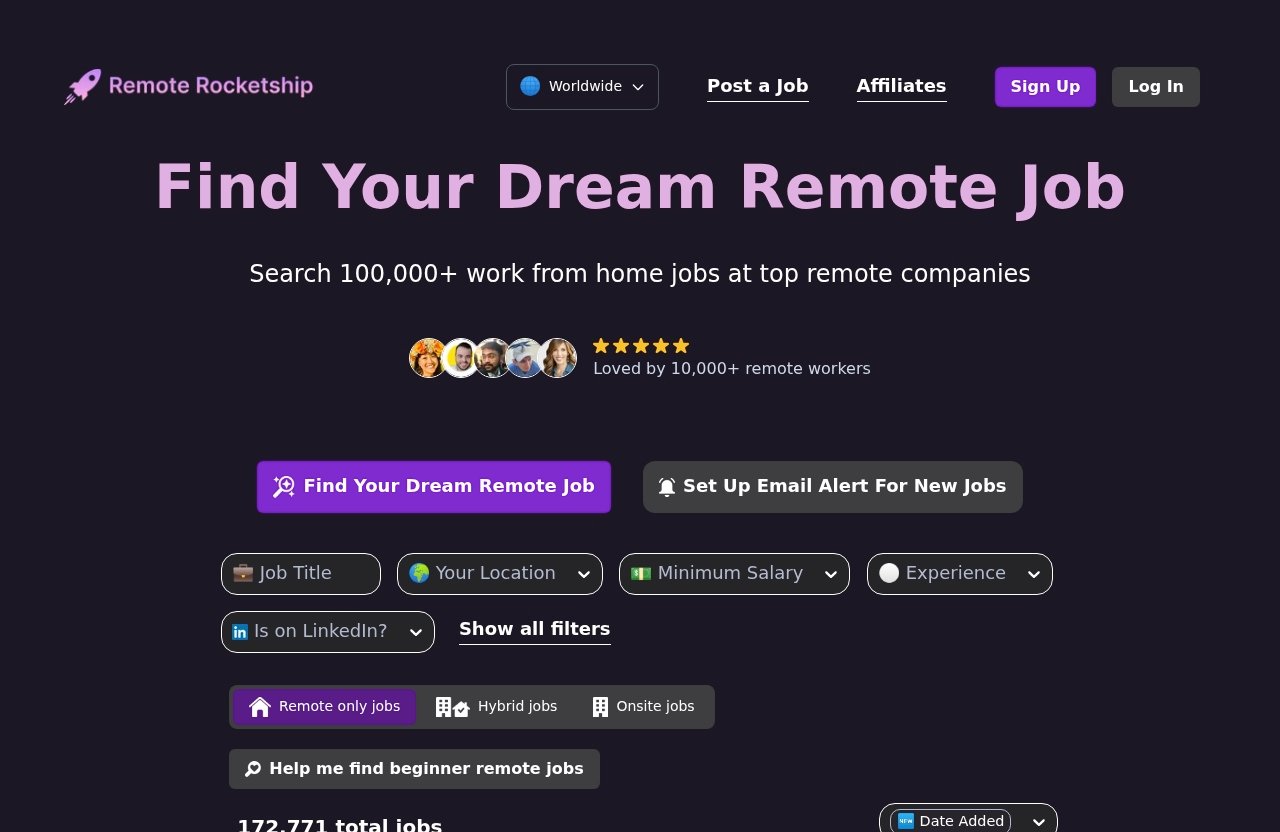
Remote Rocketship says its board is “100% remote,” contains “Verified jobs only,” and aims to provide “No scams, no junk.” It also says it is used by more than 10,000 remote workers.
According to the official site, listings are pulled straight from company career pages. The platform says it scans thousands of company career pages around the clock, with new jobs appearing minutes after companies post them. Each job is described as checked and verified.
Those statements make Remote Rocketship worth considering as a discovery tool, especially for candidates who want to find newly posted work before a role reaches larger boards. You can review the platform’s positioning directly through Remote Rocketship after reading this guide and deciding whether its workflow fits your search.
Why a safety checklist is still useful even on curated job boards
Curated sources can reduce noise, but no job board can eliminate the need for applicant judgment. A company’s hiring behavior, recruiter communications, interview process, and application destination can change after a listing is published.
That is why remote rocketship job applications should still follow a consistent safety routine. The goal is not to assume a listing is unsafe; it is to avoid sharing sensitive information until the employer, role, and hiring path make sense together.
In my own job-search screening workflow, I treat a board’s verification as one useful signal among several. I still check the employer domain, compare the job description with the company’s careers page, and confirm that application links lead somewhere credible.
Who this guide is for: first-time applicants, career switchers, and cautious remote job seekers
This remote job board safety process is useful whether you are applying for your first remote role or changing careers after years in a traditional office. It is especially relevant for applicants who are unfamiliar with applicant tracking systems, contract work, worldwide hiring, or recruiter outreach.
If you are new to the platform, start with the [Remote Rocketship Website Guide](/remote-rocketship-website-guide/) and keep this checklist open while you review roles. A cautious process should take only a few minutes per listing once it becomes a habit.
How Remote Rocketship Says It Finds and Verifies Jobs
Pulled from company career pages
Remote Rocketship says its jobs are pulled directly from company career pages rather than simply collected from broad, unfiltered job sources. This matters because an employer’s own careers page is normally one of the strongest places to confirm that a vacancy exists.
For remote rocketship job applications, this sourcing approach gives you a clear verification path: find the employer named in the listing, then locate the same opening on that employer’s official site. If the role matches, you have a stronger basis for proceeding.
A match should include more than the title. Compare the department, seniority, work location, employment type, role responsibilities, and any stated salary range.
Jobs can appear minutes after companies post them
The official homepage says Remote Rocketship finds new remote jobs minutes after companies post them. It says new jobs land on the board minutes later, allowing applicants to apply before the crowd.
Early access can be valuable, but speed can also make people careless. An applicant who rushes from a fresh listing to an unfamiliar form may miss a suspicious domain, a misleading job title, or an unnecessary request for personal data.
Use speed as an advantage, not an excuse to skip remote job application safety. A two-minute check can prevent a much larger problem later.
Why fast discovery can reduce competition but does not replace applicant-side due diligence
Being early may mean fewer applicants have reached the role, but it does not tell you everything about the employer. A real company can have a poorly communicated hiring process, and a copied job post can appear away from the original source.
When you find remote rocketship job applications that interest you, verify the source first and tailor your materials second. This sequence is faster than rewriting a resume for a role that turns out to be closed, misrepresented, or impossible to confirm.
For additional guidance on source checking, review [Verify Remote Rocketship Jobs](/verify-remote-rocketship-jobs/). The key principle is simple: trusted discovery does not remove the need for trusted confirmation.
The 2026 Remote Rocketship Application Safety Checklist
Verify the company domain before applying
Start by looking at the company’s website address. A legitimate employer should typically use a clear, consistent domain across its website, careers page, employee email addresses, and social profiles.
Watch for lookalike domains that add a hyphen, extra word, unusual country extension, or misspelling. For example, company-careers.example may not belong to company.example, even if the logo and text look convincing.
For remote rocketship job applications, open the company site independently by typing its name into a search engine instead of relying only on a link in the listing. This reduces the chance of following a copied or redirected URL.
Cross-check the role on the employer’s own careers page
Find the company’s official careers page and search for the exact position. If the listing is active there, compare it line by line with the board version.
A slight wording difference is not automatically suspicious. Employers often update descriptions or use different titles across locations. However, major conflicts—such as a different role, pay range, location, or application destination—deserve a pause.
| What to Compare | Usually Reassuring | Needs More Checking |
|---|---|---|
| Job title | Same or clearly equivalent title | Unrelated title or department |
| Employer | Same legal or public-facing company name | Different company with a similar name |
| Location | Same country, timezone, or “remote” scope | Conflicting location restrictions |
| Employment type | Same full-time, contract, or part-time status | Different status or unclear arrangement |
| Application link | Official employer ATS or careers domain | Unfamiliar form or unrelated domain |
This is one of the most effective ways to practice remote rocketship safety without slowing your search.
Confirm title, location, salary, and employment type are consistent
A credible listing gives you enough detail to understand the work. It does not need to reveal every interview-stage detail, but it should not contradict itself.
If a role says “worldwide remote” in one place but requires a specific city or timezone elsewhere, ask why. If a salary is shown, treat it as a detail to verify against the employer’s original post—not as a promise or final offer.
Remote Rocketship may show salary ranges on some listings. When it does, compare those figures with the source posting and discuss compensation directly with the employer during a legitimate interview process.
Inspect application destination: ATS, company site, or external form
Before submitting anything, inspect where the Apply link goes. Familiar applicant tracking systems, company career portals, and official company domains are generally easier to assess than anonymous forms.
An external form is not automatically fraudulent. Small businesses and early-stage companies sometimes use forms for hiring. Still, a form should identify the company, explain why it needs each field, and avoid requesting sensitive information too early.
For remote rocketship job applications, be cautious if an application page requests a passport scan, bank details, tax forms, payment, or identity documents before a verified interview and formal employment stage.
Match recruiter email and company branding
If a recruiter contacts you after you apply, compare their email address with the company domain. A recruiter from name@company.com is easier to validate than someone using a generic personal inbox while claiming to represent a large organization.
Search the recruiter’s name alongside the employer. Check whether they have a credible LinkedIn profile, a work history that fits the role, and connections consistent with the company.
Branding alone is not proof. Logos, signatures, and copied job descriptions are easy to imitate. The domain, company site, and independently verifiable employee presence matter more.
Document every step before submitting personal data
Keep a lightweight record of each application. Save the listing URL, employer careers-page URL, date, role title, contact name, and the destination where you applied.
This habit is invaluable if a recruiter follows up later with different information. It also helps you identify duplicate posts and avoid applying twice through conflicting channels.
Use a spreadsheet, notes app, or dedicated tracker. The safest remote rocketship job applications are the ones you can trace from board listing to employer source to submitted application.
Red Flags That a Remote Job Could Be Risky or Fake
Too-good-to-be-true pay or vague job scope
High pay is not inherently a scam signal, especially for specialized roles. The concern is a package that seems disconnected from the work: unusually high compensation for vague duties, no experience requirements, and immediate hiring promises.
Be wary when a listing says little beyond “work from home,” “flexible hours,” and “earn quickly.” Real roles usually identify a function, team, manager, skills, expected outcomes, or hiring location.
Requests for upfront payment or equipment purchases
Never pay to apply for a job. Legitimate employers do not require candidates to buy training, gift cards, software licenses, background-check packages, or “starter equipment” through a recruiter.
Some legitimate companies provide equipment or reimburse approved expenses after hiring. The difference is critical: an employer has a documented process and does not ask you to send money, deposit a check, or purchase from a recruiter-selected seller.
This is among the clearest remote job red flags. Read more examples in the [Remote Rocketship Scam Warning](/remote-rocketship-scam-warning/) guide.
Off-platform communication with personal email or chat apps too early
A recruiter might use phone, email, or video software during a real hiring process. But moving immediately to a personal email account, encrypted chat app, or text-only interview should prompt stronger verification.
A credible recruiter should be able to identify the company, role, hiring manager, and official application route. They should not object when you ask to continue through a company email or official scheduling system.
Pressure to act immediately without screening
Scammers often manufacture urgency: “Apply in the next hour,” “The job is yours today,” or “Send your ID now to reserve your place.” Genuine employers may move quickly, but they still provide enough information for you to make an informed decision.
For remote rocketship job applications, apply early when you can, but do not let urgency override basic checks. A real employer can wait a few minutes while you confirm the listing.
Missing company identity, website, or team footprint
A company does not need to be famous to be real. However, you should be able to find some independent evidence that it exists: an official website, product or service, leadership information, company registration where relevant, customer references, press coverage, or employees with credible work histories.
If every search result points only to the job listing itself, do not provide personal data. Lack of a footprint does not prove fraud, but it means the risk is higher and your verification burden should be higher too.
Inconsistent salary, timezone, or location details
Conflicts often reveal copied, outdated, or misleading listings. Check whether the stated employer, country eligibility, working hours, and pay currency are consistent across the job board, employer site, and recruiter messages.
| Signal | Lower-Risk Explanation | Higher-Risk Interpretation |
|---|---|---|
| Different title wording | Employer uses a local title variation | Role and department do not match |
| Generic recruiter email | Agency recruiter uses a business domain | Personal inbox claims to be the employer |
| Fast interview | Urgent hiring need with real people involved | Text-only offer with no interview |
| Equipment mention | Employer provides documented equipment | Candidate must pay or forward funds |
| Remote location | Clear country or timezone eligibility | “Anywhere” but later demands contradictory details |
Official website · Latest pricing & offers
How to Vet a Listing Before You Apply
Search the company website and LinkedIn presence
Start with an independent search for the company name. Find its official website, then look for its careers page, product information, leadership, customer base, and legal contact details.
Next, check LinkedIn for a company page and employees. A small company may have a limited presence, but there should usually be some coherent connection between its site, staff, and stated business. You can also compare information with the company’s LinkedIn presence when one is available.
Check whether the role is still live on the employer site
A job can close quickly, particularly when boards surface fresh openings. If the employer site says the role is closed, do not assume a third-party copy is still valid.
This does not make the board listing unsafe by itself; it may simply be a timing difference. Still, the employer’s careers page should take priority when deciding whether to submit remote rocketship job applications.
Look for employee, funding, press, or product evidence
Look beyond the listing. Can you see what the company sells, who uses it, where it operates, or who works there? Search for a product page, customer stories, public releases, leadership interviews, professional profiles, or reputable news coverage.
Do not rely on a single signal. A polished website alone is easy to create, while a modest site plus real employees, an active product, and a consistent employer identity is more persuasive.
Use scam checks: domain age, email format, and contact details
Domain age can be a useful clue, not a final verdict. New companies can have new domains, and older domains can be compromised. Use it alongside other checks.
Confirm that contact emails match the domain shown on the official website. Look for a business address, privacy policy, terms, or contact page that is internally consistent. If the only communication channel is a personal messaging account, apply greater caution.
If you are learning how to verify a remote job, prioritize consistency over any one technical check. A legitimate company’s identity should make sense across multiple independent places.
If the job mentions pay, compare it against known market expectations
Pay ranges vary by experience, location, contract type, and industry. Rather than rejecting a high or low number immediately, compare it with similar roles at established employers and ask whether the duties justify the range.
Be skeptical when compensation is unusually generous but the listing cannot explain the role. A clear salary range paired with a real company page and normal hiring process is much more credible than a vague promise of easy income.
Safe Application Practices for Remote Job Seekers
Use a job-specific email address
Create a professional email address dedicated to your job search. This keeps recruiter messages organized, limits exposure of your personal inbox, and makes it easier to spot suspicious follow-ups.
Use a strong unique password and enable multi-factor authentication. This small step improves remote job scam prevention without making your application process more complicated.
Do not send sensitive IDs unless you are in a legitimate hiring stage
A resume, portfolio, and standard contact details are normal early-stage application materials. A passport, driver’s license, social security number, bank information, tax documents, or payment details are not.
Only provide identity or payroll information after you have independently confirmed the employer, completed a credible hiring process, and received official instructions through a verified channel. Even then, ask why the information is needed and how it will be protected.
Protect your resume from oversharing personal data
Your resume should show your qualifications, not expose unnecessary personal details. Leave out government ID numbers, full street address, date of birth, marital status, banking information, and copies of certificates unless genuinely necessary later.
For remote rocketship job applications, a city and region, professional email, portfolio link, and relevant work history are normally sufficient at the first stage. Less sensitive data means less harm if an application is mishandled.
Save screenshots and links of every application
Save a copy of the job description, application confirmation, recruiter message, and original URL. Listings can change or disappear, and your records help you identify what was originally promised.
This also makes follow-up easier. You can refer to the correct role title, application date, and source rather than relying on memory after sending multiple applications.
Never pay to apply or buy equipment through the recruiter
This rule deserves repeating because it is so important. Do not pay an application fee, accept a check to buy equipment, transfer money, purchase cryptocurrency, or buy products from a recruiter.
A real company may discuss equipment, but it will not need your money to make an offer. Safe remote job applications protect both your career time and your finances.
What to Do If a Listing Seems Suspicious
Pause and verify before submitting anything
Stop before you upload documents or respond to a message. Re-check the employer site, the company domain, the role details, and the application destination.
Do not feel pressured to decide based on a recruiter’s urgency. A few minutes spent verifying can prevent identity theft, financial loss, or a long conversation with someone impersonating an employer.
Report the role to the board and the employer if needed
If a listing appears to use a company name improperly, notify both the job board and the company through contact details you find independently. Explain what you observed: the URL, job title, suspicious email, screenshots, and any request for money or sensitive data.
Avoid contacting an employer through contact information supplied only by the suspicious party. Use the contact page or official social profile you found yourself.
Search for duplicates or reposts
Search the title, company name, and a distinctive sentence from the description in quotation marks. You may find the original employer posting, older copies, or warnings from other candidates.
Duplicate listings are not automatically malicious. But a copied role with altered pay, changed contact details, or an unfamiliar application link is a strong reason to stop.
Move on if the company cannot be independently confirmed
You do not need to solve every questionable listing. If you cannot confirm the employer, job, and application path independently, the safest choice is to skip it.
Your time is valuable. Strong remote rocketship job applications focus on opportunities that can withstand basic scrutiny, not roles that require you to rationalize multiple warning signs.
Is Remote Rocketship Legit for Applications?
What the official homepage promises
The official Remote Rocketship homepage says it offers remote-only, verified jobs and aims to filter out scams and junk. It says the site scans thousands of company career pages around the clock, pulls jobs from company career pages, and checks and verifies new listings.
These are the platform’s published claims, and they describe a sourcing model that can be useful for remote job discovery. They should not be read as a guarantee that every future interaction with an employer or recruiter will be risk-free.
What the public listing data suggests about volume and freshness
Remote Rocketship says jobs can appear minutes after companies post them and that many land on its board before other job boards. That emphasis on freshness is relevant for candidates who want to apply promptly.
The practical takeaway is to build a fast but repeatable review process. Use fresh listings as a reason to check sooner, not as a reason to verify less.
For a broader perspective on whether the platform suits your needs, see [Is Remote Rocketship Legit?](/is-remote-rocketship-legit/). The sensible answer is nuanced: the official site describes verification and career-page sourcing, while applicants should still confirm each employer and destination independently.
The difference between a curated board and a guarantee of employer behavior
A curated board can improve the quality of opportunities you see. It cannot control every company’s interview practices, every employee email account, every future website change, or every impersonator using a real company’s name.
That distinction is central to remote rocketship job applications. Treat the board as a useful discovery layer, then use the employer’s site and your own safety checks to decide whether to continue.
Best Practices for Faster, Safer Remote Applications
Apply early, but verify first
Create a short review sequence you can complete before applying:
- Confirm the company website and domain.
- Find the role on the employer careers page.
- Compare title, location, employment type, and pay details.
- Inspect the application destination.
- Submit only standard application information.
- Save the listing and confirmation.
This takes far less time than recovering from a bad application or pursuing a role that is no longer open.
Create a shortlist of trusted employers
As you search, maintain a list of employers whose business, careers page, and hiring process you have already reviewed. This creates a safer pipeline and lets you move faster when a matching opening appears.
Use job alerts selectively rather than applying indiscriminately. The [Remote Rocketship Job Alerts](/remote-rocketship-job-alerts/) guide can help you organize notifications around your target role, location, and seniority.
Tailor resume and cover letter to the role
A safe application can still be a strong application. Match your resume summary, skills, achievements, and portfolio samples to the specific requirements of the role.
Do not send unnecessary personal documents to prove interest. A targeted resume and concise cover letter are more professional—and safer—than oversharing data at the first stage.
Track submissions and follow-ups in a spreadsheet
Use columns for company, role, source URL, employer careers-page URL, date applied, recruiter name, application destination, follow-up date, and verification notes. Add a simple status such as “verified,” “needs review,” “applied,” “interviewing,” or “skipped.”
This system helps you spot patterns. If a recruiter’s details change, a role appears under multiple names, or a company asks for something unusual, your notes give you the context needed to make a calm decision.
The best remote rocketship job applications balance speed with skepticism. Verify the employer, protect your information, track what you submit, and walk away whenever the facts do not add up.
Official website · Latest pricing & offers
FAQ
Is Remote Rocketship safe to use for job applications?
Remote Rocketship says it offers verified jobs and filters out scams and junk, with jobs pulled from company career pages. That is a positive starting point, but no job board should replace your own verification.
For remote rocketship safety, confirm the employer’s website, careers page, recruiter identity, and application destination before sharing more than standard application information.
How do I know if a remote job on Remote Rocketship is legit?
Check whether the role appears on the employer’s official careers page. Then verify the company website, LinkedIn presence, recruiter email domain, location details, job description, and application link.
The more independent sources that agree, the more credible the opportunity is likely to be. If key details conflict, pause and investigate before applying.
What are the biggest red flags in remote job applications?
The largest warning signs are requests for upfront payment, equipment purchases, banking information, identity documents too early, vague job descriptions, extreme urgency, and personal-email or chat-only communication.
Other remote job red flags include inconsistent company details, a missing business footprint, and pay that seems disconnected from the required experience or responsibilities.
Should I apply directly through Remote Rocketship or the employer site?
The safest approach is to verify the source first, then apply through the employer’s official careers page or recognized applicant tracking system when possible. This gives you a clearer record of where your information goes.
If the board directs you to an official company application page, compare the domain with the employer’s website before submitting your materials.
What should I do if a listing looks suspicious?
Stop before submitting information or responding to messages. Search for the employer independently, compare the role with the official careers page, check for duplicate posts, and save screenshots.
If you cannot verify the company and role independently, skip the opportunity. You can also report concerning details to the board and to the employer through official contact channels.
Related Reading
- Verify Remote Rocketship Jobs: A 2026 Safety Checklist Before You Apply
- Remote Rocketship Scam Warning 2026
- How Can I Tell If a Remote Job Is Legit?
