
If you are comparing remote job boards, Remote Rocketship USA is worth a closer look—but not as a magic shortcut. Based on public search results and LinkedIn positioning, Remote Rocketship is a remote job board / human resources services platform that helps people find remote tech jobs and remote jobs from across the web, including roles that may not appear on other job boards.
This review is written for US-based applicants who care about eligibility, employer fit, and faster screening. I’ll keep the analysis practical and cautious: the official homepage and pricing page were inaccessible during this research session due to bot/security verification, so pricing could not be verified.
Official website · Latest pricing & offers
What Remote Rocketship USA Is and Who It’s Best For
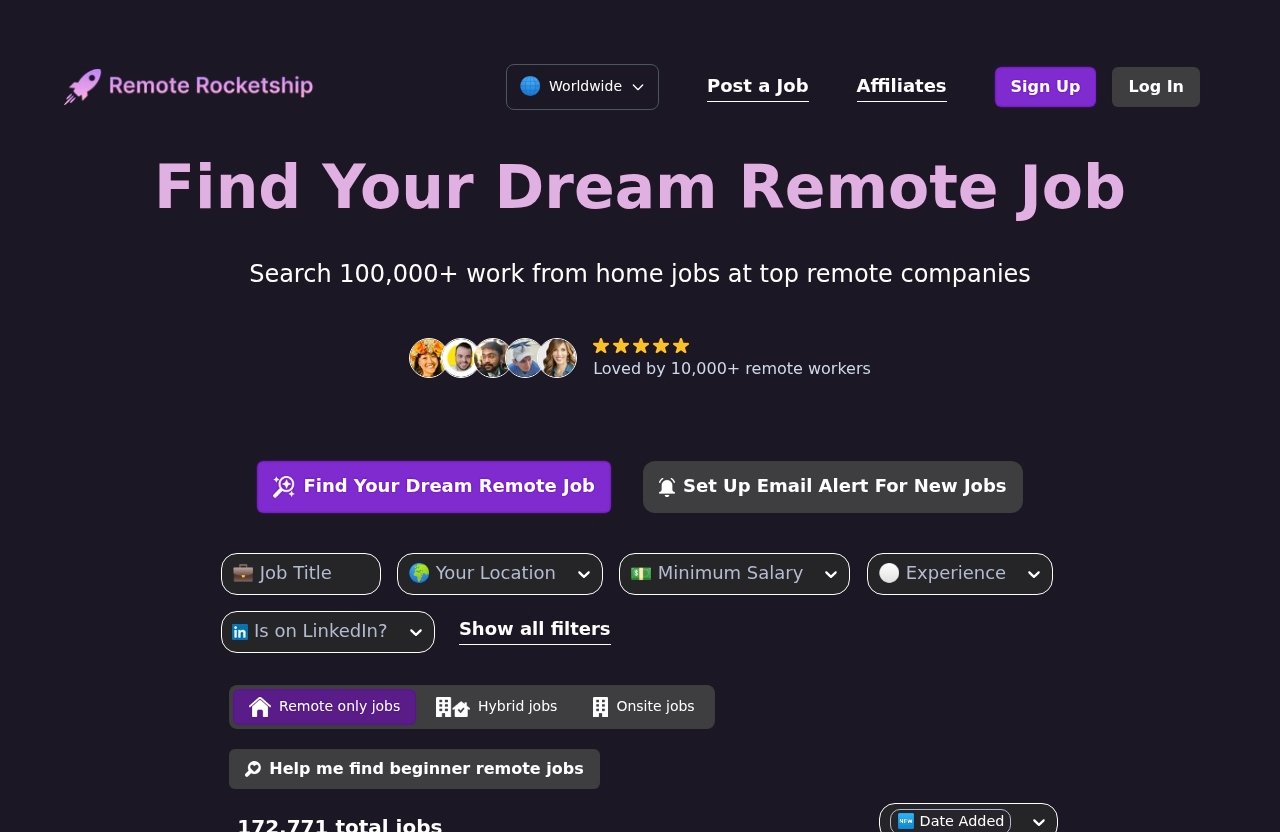
Remote Rocketship USA is the USA-specific version of Remote Rocketship’s remote jobs experience. The verified USA-specific homepage exists at https://www.remoterocketship.com/us/ and is titled “Remote Jobs | Work from Home jobs.”
That matters because many “remote” jobs are not truly open worldwide. A role may be remote but still limited to US residents, certain states, specific time zones, or people authorized to work for a US employer.
For readers comparing tools, this is the core question: does Remote Rocketship USA help you find better-fit US remote roles faster than a broad job board?
Short answer: is it a fit for US remote job seekers?
For many US-based applicants, Remote Rocketship USA looks like a useful board to test, especially if you want a more focused remote search than scrolling through general listings on massive platforms. Its public positioning suggests it is designed around remote job discovery, including jobs sourced from across the web.
That said, I would not rely on it as your only source. The best approach is to use it alongside broader boards, employer career pages, and your own application tracker.
If you want to compare it directly in your workflow, you can explore Remote Rocketship through this affiliate link. This article may earn a commission if you use that link, but the goal here is to help you decide whether the board fits your search—not to assume it is right for everyone.
How the USA-specific board differs from a general remote board
A general remote board can include roles from anywhere: Europe, Canada, Latin America, Asia-Pacific, or global teams with specific country requirements. That breadth is useful, but it often creates wasted clicks for US applicants.
A USA-specific page should, in theory, reduce that friction by orienting the search around work-from-home jobs relevant to US-based candidates. With Remote Rocketship USA, the important evaluation point is not just whether listings say “remote,” but whether they clearly match US eligibility.
For comparison, you may also want to read Land Remote Work’s broader guide to remote job boards and our related Remote Rocketship review if you are building a shortlist of tools.
Best use cases: active applicants, career switchers, and niche tech candidates
Remote Rocketship’s public positioning emphasizes remote tech jobs and remote jobs from across the web. That makes Remote Rocketship USA most interesting for applicants who are actively applying and want more discovery surface than the same few listings everyone sees.
It may be especially useful for:
| Job seeker type | Why it may help |
|---|---|
| Active applicants | More sources can mean more chances to find relevant openings quickly. |
| Career switchers | A focused remote board can reduce noise while exploring target roles. |
| Tech candidates | Public positioning specifically references remote tech jobs. |
| US-based remote-first applicants | The USA page may help narrow toward US-relevant listings. |
If you are only casually browsing, a niche board may still help—but the value is clearer when you are applying consistently and measuring results.
How the USA Board Helps You Find US-Based Remote Jobs
The main benefit of Remote Rocketship USA is not that it replaces judgment. It is that it may help you start from a more relevant pool of remote listings.
For US applicants, the hardest part of remote job search is often not finding roles labeled “remote.” It is finding roles where the employer will actually hire you based on country, state, work authorization, tax setup, and time zone.
Why US location targeting matters
Many remote job seekers learn this the hard way: “remote” does not always mean “remote from anywhere.” A job can be remote but restricted to the United States, Canada, a specific US state, or a set of time zones.
That is why Remote Rocketship USA should be evaluated as a US remote jobs board, not just a generic listing site. The more clearly a board helps you isolate US-eligible jobs, the less time you waste on applications that were never viable.
When reviewing a posting, check for:
- “US only,” “United States,” or “authorized to work in the US”
- Time zone language such as EST, CST, MST, or PST
- State exclusions or state-specific hiring limitations
- Whether the employer says remote-first, hybrid, or remote-friendly
- Whether the role is employee, contractor, or freelance
What to expect from location and employer filters
The phrase remote rocketship location filters is popular because location filtering is one of the biggest pain points in remote job search. Since the official product pages were inaccessible in this research session, I cannot verify a complete feature list or make claims about exact filters.
Instead, evaluate the board practically. When using Remote Rocketship USA, look for whether the search experience helps you separate US roles from global roles, whether location language is visible before opening each posting, and whether employer details are easy to inspect.
Strong location filtering should reduce ambiguity. Weak filtering leaves you opening every job description manually just to discover the role is restricted to another country.
How to avoid wasting time on non-US roles
Before applying to any listing, scan the job description from bottom to top. Eligibility language often appears near the end, under “requirements,” “location,” “benefits,” or “employment details.”
A good workflow for remote rocketship us jobs is:
- Start on the USA-specific board.
- Open only roles that match your target title or skill set.
- Search within the posting for “United States,” “US,” “timezone,” “authorized,” and “remote.”
- Confirm the employer’s career page has the same role.
- Apply through the employer’s official page when possible.
This extra check takes a minute, but it protects you from stale listings, ambiguous remote policies, and country mismatch.
Coverage and Employer Mix: What the SERP Suggests About Remote Rocketship
From public search results and LinkedIn positioning, Remote Rocketship appears to be a remote job board that helps users find remote jobs from across the web. Its positioning also says it helps users find jobs not posted on other job boards.
That is the main reason Remote Rocketship USA may appeal to people who feel like they keep seeing the same jobs on LinkedIn, Indeed, and other large boards.
Jobs sourced from across the web
The verified public positioning indicates Remote Rocketship helps people find remote jobs from across the web. This is important because aggregation can expand your search beyond a single platform’s employer base.
For Remote Rocketship USA, the practical value depends on how well that sourcing translates into relevant US-eligible opportunities. Breadth alone is not enough; the listings still need to be fresh, clear, and applicable to your location.
When testing any aggregator-style board, compare a few listings against the employer’s actual careers page. If the role exists there and the details match, that is a stronger signal.
Why breadth can help hidden-job discovery
Many candidates search the same large job boards every day. That creates crowded applicant pools, especially for entry-level remote roles, customer support, marketing, operations, and software jobs.
A board that surfaces hidden remote jobs or less widely distributed listings can help you find opportunities before they become saturated. This is where Remote Rocketship USA may be useful as part of a broader strategy.
However, “hidden” should not be interpreted as guaranteed better. It simply means a role may be less visible on the largest job platforms, which can sometimes improve your odds if you apply quickly and fit the requirements.
Potential limitations to watch for
There are three limitations I would watch closely with Remote Rocketship USA.
First, freshness matters. Remote roles often close quickly, and older listings can waste time if they remain indexed after the employer has stopped hiring.
Second, employer legitimacy still needs verification. A job board can surface an opening, but you should confirm the company, domain, recruiter identity, and application path.
Third, pricing could not be verified from the official homepage or pricing page during this research session because those pages were blocked by bot/security verification. If you see a paid option, verify the current cost and terms directly before signing up.
Feature Breakdown for US Job Seekers
Because official product and pricing pages were inaccessible, this section does not claim a detailed feature list. Instead, it focuses on the feature qualities that matter most when evaluating Remote Rocketship USA as a remote job board for US applicants.
A job board is only valuable if it helps you identify, prioritize, and apply to better-fit roles faster.
Search and browsing workflow
The search workflow should help you move from broad interest to qualified target quickly. For US applicants, the ideal flow is title or skill search first, then location eligibility, then company fit.
When testing Remote Rocketship USA, pay attention to how many clicks it takes to answer these questions:
- Is the role open to US applicants?
- Is it fully remote, hybrid, or location-restricted?
- Is the employer hiring employees or contractors?
- Is the role current on the company website?
- Does the job match your seniority level?
If the board helps you answer those questions faster than a general platform, that is a meaningful advantage.
Alerts and follow-up behavior
Remote job alerts can be helpful, but I cannot verify from inaccessible official pages which alert features are currently available. So treat alerts as an evaluation category rather than an assumed feature.
Whether you use alerts from Remote Rocketship USA, Google, LinkedIn, or another tool, the behavior matters more than the tool itself. Fast follow-up is often the difference between being one of the first qualified applicants and joining a pile of hundreds.
A good alert workflow includes:
| Step | Why it matters |
|---|---|
| Daily review | Remote jobs can fill quickly. |
| Eligibility check | Prevents wasted applications. |
| Employer verification | Reduces scam and stale-listing risk. |
| Tracker update | Helps you measure which boards perform. |
What features matter most for faster applications
The best remote job board features are the ones that reduce friction. Fancy dashboards are less important than relevance, freshness, clear location data, and fast access to the original posting.
For Remote Rocketship USA, evaluate the board based on outcomes:
- Did you find US-eligible roles you had not seen elsewhere?
- Were listings easy to screen?
- Did employer information look clear?
- Could you apply quickly through a trustworthy path?
- Did the board save time compared with broader job boards?
That outcome-based approach is more reliable than relying on marketing claims or remote rocketship reviews alone.
Official website · Latest pricing & offers
How to Evaluate Remote Rocketship USA Before You Rely on It
Before making Remote Rocketship USA a core part of your job search, run a small test. This is the same approach I recommend for any paid or free job board: judge it by relevance, freshness, and application results.
You do not need weeks of data to learn whether a board is promising. A focused five-minute test can reveal a lot.
Signs the board is strong for US jobs
A strong US remote jobs board should show clear evidence that it understands the difference between “remote” and “US-eligible remote.”
Look for these signs when testing Remote Rocketship USA:
- Multiple roles that clearly mention US eligibility
- Listings from a variety of employers, not just a few repeated companies
- Fresh-looking postings that also appear on employer career pages
- A mix of seniority levels relevant to your search
- Clear job titles, locations, and remote-policy language
- Search results that do not require excessive manual cleanup
If you find several relevant roles in your first session, that is a positive signal.
Red flags in remote job boards
The phrase remote rocketship legit is a reasonable query because remote job scams are common. Based on public positioning and SERP evidence, Remote Rocketship appears to be a real remote job board, but each listing still deserves verification.
Watch for red flags such as:
- Jobs asking for payment to apply
- Recruiters using personal email domains for official hiring
- Vague company names or missing employer websites
- Salaries that are unusually high for the role
- Requests for sensitive identity documents before interviews
- Listings that do not exist on the employer’s official site
These warnings apply to every job board, not only Remote Rocketship USA.
A simple 5-minute test before subscribing or relying on the board
Here is a quick test you can run before deciding whether Remote Rocketship USA deserves a regular spot in your search workflow.
- Search for your target title, such as “customer success,” “product manager,” “data analyst,” or “software engineer.”
- Open five listings that look relevant.
- Check whether each one is open to US applicants.
- Confirm whether the job exists on the employer’s career page.
- Note how many were truly worth applying to.
If three or more are relevant, current, and US-eligible, the board may be worth adding to your weekly routine. If most listings are unclear or not a match, use it more selectively.
Remote Rocketship USA vs Broader Job Boards
Comparing Remote Rocketship USA with broader boards is not about declaring one universally better. It is about choosing the right tool for each stage of your search.
Large platforms offer scale. Niche remote boards can offer better focus.
When a niche board beats a giant board
A niche board can beat a giant board when it reduces noise. If you spend less time filtering out hybrid jobs, non-US roles, and irrelevant industries, you can spend more time tailoring applications.
For remote-first applicants, Remote Rocketship USA may be useful when the USA board surfaces roles that are easier to screen for location and remote fit. That is especially valuable if you are targeting specific remote-friendly job categories.
Niche boards can also help with discovery. If Remote Rocketship’s public positioning around jobs sourced from across the web holds true in your searches, it may reveal opportunities you missed elsewhere.
When LinkedIn or larger boards may still be better
Larger boards still have advantages. LinkedIn, Indeed, and major employer platforms often provide more company context, recruiter visibility, networking signals, and applicant volume indicators.
If your strategy includes referrals, recruiter outreach, or researching hiring managers, broader platforms may be stronger. They may also be better for local hybrid roles, non-remote jobs, or industries less represented on remote-first boards.
So the question is not whether Remote Rocketship USA replaces large boards. It is whether it improves your remote-specific discovery enough to justify using it alongside them.
Using both together for the best results
The best workflow combines breadth and focus. Use broad platforms for networking, market research, and employer discovery. Use remote-focused boards for targeted listings and faster screening.
A balanced setup might look like this:
| Tool type | Best use |
|---|---|
| Remote Rocketship USA | Finding US-relevant remote listings and possible hidden opportunities |
| Networking, recruiter visibility, company research | |
| Indeed / Google Jobs | Broad market coverage |
| Employer career pages | Final verification and direct applications |
| Application tracker | Measuring which sources produce interviews |
This approach helps you avoid overcommitting to any single source.
Best Ways to Use Remote Rocketship USA in a Real Job Search
The value of Remote Rocketship USA depends on how you use it. A board is not a strategy by itself; it is a sourcing channel.
The goal is to turn listings into qualified applications without wasting time on roles that cannot hire you.
Build a weekly application routine
Set a repeatable schedule. For example, review remote job boards three to five times per week, apply to the best-fit roles quickly, and reserve deeper tailoring for roles with strong alignment.
A practical routine for Remote Rocketship USA could be:
- Monday: scan new US remote roles in your target category
- Tuesday: verify employers and apply to top matches
- Wednesday: check broader boards and company pages
- Thursday: follow up on warm leads or referrals
- Friday: review your tracker and adjust search terms
Consistency matters more than marathon browsing.
Save time by screening for US eligibility first
Before tailoring a resume, confirm the role is open to you. This is the biggest time-saving habit for US remote applicants.
For each listing on Remote Rocketship USA, check:
- Country eligibility
- State restrictions
- Time zone overlap
- Work authorization language
- Remote-work policy
- Employer location and hiring model
If any of those are unclear, decide whether the role is strong enough to justify extra research. Do not spend 45 minutes tailoring an application before confirming you are eligible.
Pair the board with alerts and a tracker
Even if you use several boards, keep one tracker. This helps you see which sources actually produce interviews rather than just more browsing.
Track:
| Field | Example |
|---|---|
| Job title | Remote Customer Success Manager |
| Source | Remote Rocketship USA |
| Company | Employer name |
| Eligibility confirmed? | Yes / No / unclear |
| Applied date | Date submitted |
| Application path | Employer site / board / recruiter |
| Outcome | Interview / rejection / no response |
This is also how you answer the personal version of remote rocketship worth it. If the board produces relevant applications and interviews, it is earning its place in your workflow.
Final Verdict: Is Remote Rocketship USA Worth It for US Remote Jobs?
Remote Rocketship USA appears to be a real and relevant option for US-based remote job seekers, especially those who want a remote-first board rather than a giant general marketplace. Public positioning suggests Remote Rocketship helps users find remote tech jobs and remote jobs from across the web, including jobs not always posted on other job boards.
The balanced answer: it is worth testing, but you should verify listings carefully and compare results against other job boards.
Best for whom
Remote Rocketship USA is likely best for active US-based applicants who want better signal, faster screening, and possible access to less crowded remote listings. It may be especially useful for tech, operations, support, product, marketing, and other remote-friendly roles if the search results match your target.
It is also a good fit for people who are tired of broad boards where “remote” often means hybrid, location-restricted, or unclear.
Who should look elsewhere
You may want to prioritize other tools if you need verified pricing before browsing, since pricing could not be confirmed from the official pages in this research session. You may also prefer broader platforms if your search depends heavily on recruiter outreach, referrals, or local hybrid opportunities.
If your field is not commonly remote-friendly, a niche remote board may have fewer relevant roles. In that case, use Remote Rocketship USA as a supplement rather than your main source.
Bottom-line recommendation
My bottom-line recommendation is to test Remote Rocketship USA for a week and judge it by outcomes: relevant US-only roles found, applications submitted, and interviews generated. Do not rely on remote rocketship reviews alone, and do not assume every remote listing is open to US applicants.
If the USA board helps you find hidden remote jobs, confirm eligibility faster, and apply with less friction, it can be a useful addition to your search stack. If you want to evaluate it directly, you can visit Remote Rocketship here and compare it with the broader boards you already use.
Official website · Latest pricing & offers
FAQ
Is Remote Rocketship legit for work from home?
Remote Rocketship appears to be a real remote job board based on public SERP and LinkedIn positioning. It is described as a platform that helps people find remote jobs, including remote tech jobs and listings sourced from across the web.
Still, you should verify every work-from-home listing before applying. Check the employer’s official website, country eligibility, recruiter identity, and whether the role is still active.
What does Remote Rocketship do?
Remote Rocketship helps users find remote job opportunities. Public positioning says it sources remote jobs from across the web and helps users discover jobs that may not be posted on other job boards.
For US applicants, the USA-specific page is especially relevant because it is positioned around “Remote Jobs | Work from Home jobs.”
Is Remote Rocketship worth it?
Remote Rocketship may be worth it if it saves you time and surfaces relevant US-eligible remote roles you are not finding elsewhere. The best way to judge value is to compare the quality of listings, application speed, and interview outcomes against your other job boards.
Pricing could not be verified during this research session because the official homepage and pricing page were inaccessible due to bot/security verification.
How do I find US-only remote jobs on Remote Rocketship USA?
Start with the USA-specific board, then use any available location or search filters to narrow toward US roles. After opening a listing, confirm the job description mentions US eligibility, time zone expectations, work authorization, and any state restrictions.
Before applying, verify the role on the employer’s official career page whenever possible. This helps you avoid stale listings and non-US remote roles.
