
Finding a remote job legit opportunity should not require blind trust. Real work-from-home roles are widely available, but scammers also use polished job posts, familiar company names, and urgent messages to collect money or personal information.
The safest approach is simple: verify the company, the job listing, the recruiter, and the application process before sharing anything sensitive. This guide explains how to identify legit remote jobs, avoid remote job scams, and build a repeatable process for applying with confidence.
Official website · Latest pricing & offers
What Makes a Remote Job Legit in 2026?
A remote job legit listing is one connected to a real employer, a genuine open position, and a normal hiring process. The job should have clear responsibilities, reasonable qualifications, identifiable contacts, and a way to confirm it through the employer’s official website.
Remote work itself is not a warning sign. Many established businesses hire fully remote employees, contractors, and distributed teams. The concern begins when a listing is anonymous, overly urgent, unusually generous, or asks for financial or identity information before the employer has properly evaluated you.
The Difference Between a Real Listing, a Misleading Listing, and a Scam
A real listing accurately represents an open role. You can typically find the employer’s website, business information, leadership or team presence, and a matching role on its careers page or verified hiring channel.
A misleading listing may come from a real company but contain outdated information, vague compensation, unclear location restrictions, or a title that does not match the actual work. It is frustrating, but not necessarily fraudulent.
A scam is designed to take something from you. That could include money, bank details, login credentials, government ID documents, tax information, or unpaid labor. When evaluating whether a remote job legit opening is real, focus on what the employer can verify and what they are asking you to give up.
Why Remote-Only Roles Can Still Be Legitimate
A remote-only role can be legitimate when the employer clearly explains how the team works, where candidates may be located, what time-zone expectations apply, and how performance is measured. Legitimate employers understand that remote work requires deliberate communication and usually provide practical details about collaboration, reporting, and equipment.
Do not assume a role is fake just because there is no physical office near you. Instead, look for proof that the organization exists and that the role is being advertised through an authentic channel.
For example, a company may list a position on its own careers page, link to an applicant tracking system, and use email addresses tied to its domain. Those details are more meaningful than a flashy job title or a promise of “easy money from home.”
What Legitimate Employers Usually Disclose
A remote job legit employer normally provides enough detail for you to assess whether the role fits. The post does not need to reveal every internal process, but it should answer basic questions.
Look for:
- The employer’s legal or public-facing company name
- A working website and a consistent company email domain
- A clear job title and specific duties
- Required skills, experience level, or education where relevant
- Location, country, state, or time-zone restrictions
- Employment type, such as employee, contractor, temporary, or freelance
- A realistic explanation of compensation, benefits, or salary range where required
- A standard application process and identifiable contact method
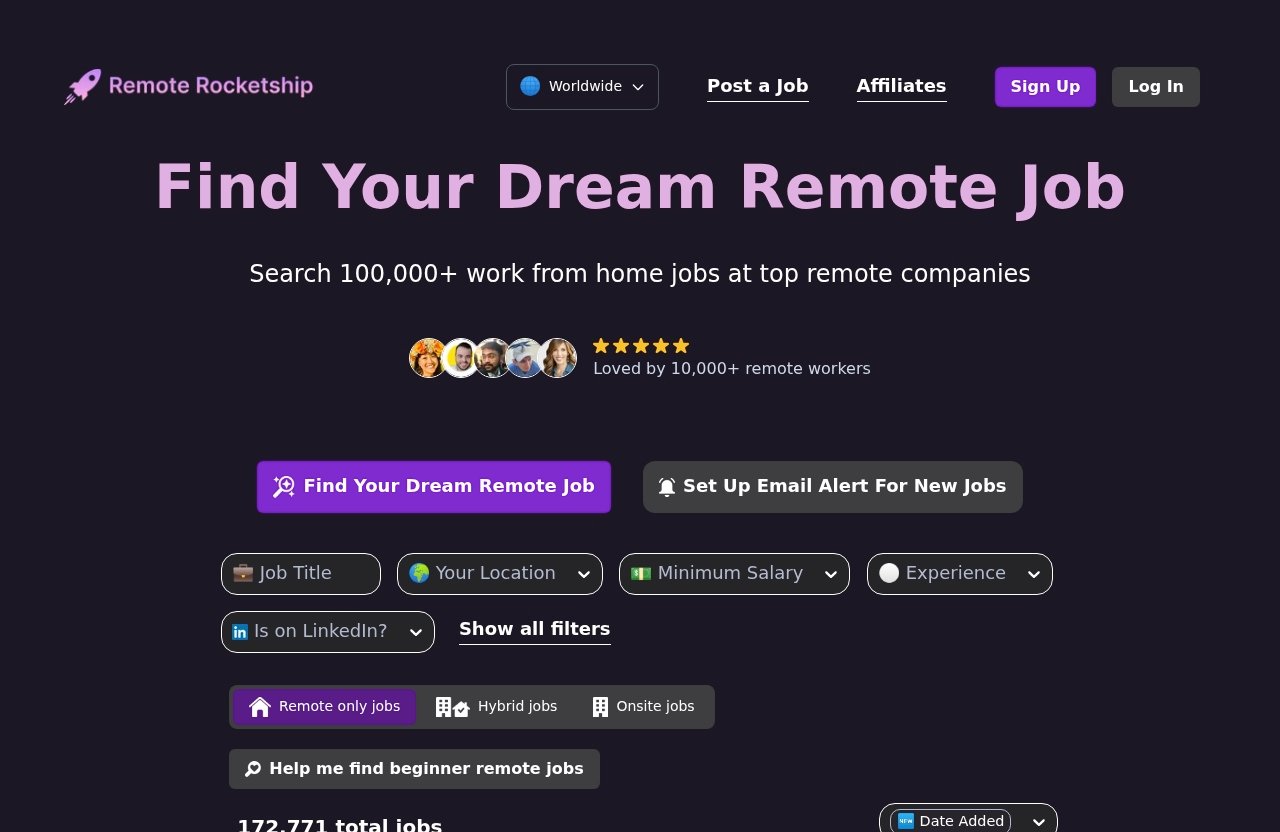
Some job-discovery tools also explain how they source roles. For instance, Remote Rocketship says it scans thousands of company career pages around the clock, pulls jobs directly from company career pages, and checks and verifies jobs before they appear. Those are platform statements, not a substitute for your own review, but source transparency is a useful signal when assessing a job board.
Quick Remote Job Safety Checklist Before You Apply
You do not need an hour to perform a first-pass check. A two-minute review can identify many obvious concerns before you invest time in a cover letter or a lengthy application.
Use this remote job legit checklist before opening an application form.
Company Name and Website Check
Search the company name independently rather than relying only on the link in the job post. Visit the company website through your own search result and look for a careers page, contact information, product or service details, and consistent branding.
Then search for the exact job title plus the company name. If the role is legitimate, you may find the same position on the employer’s career page, a professional social profile, or another established job platform.
Quick checks:
- Does the company website load and contain substantive information?
- Is the company’s business model understandable?
- Is there an official careers page or hiring portal?
- Does the job title appear on the official site?
- Are the company name and logo being used consistently?
A company can be small and still be real. What matters is whether its identity can be independently confirmed.
Domain and Email Verification
A legitimate recruiter commonly writes from an email address using the employer’s official domain. If the company website is companyname.com, an authentic recruiter may use an address such as name@companyname.com.
Be cautious when a supposed hiring manager uses a free inbox provider, a misspelled domain, or a lookalike address with extra words, hyphens, or letters. A message from company-careers-mail.com is not the same as a message from the company’s actual domain.
Before deciding a remote job legit message is safe, compare the sender’s domain character by character with the official website. Do not reply through the suspicious message to verify it; use the contact information listed on the company’s real site.
Role and Compensation Sanity Check
Read the description as if you were the hiring manager. Does the employer explain what you would do during a normal week? Are the skills and pay aligned with the duties?
Be skeptical if a listing promises exceptional income for minimal work, such as a high weekly salary for “data entry” with no experience, no interview, and no measurable responsibilities. High pay is not proof of a scam, but vague work paired with extraordinary earnings is a common remote hiring red flag.
Ask yourself:
- Are the responsibilities specific?
- Does the pay make sense for the skill level and workload?
- Are qualifications realistic?
- Does the employer explain how success will be evaluated?
- Is the language professional and internally consistent?
Application Flow Check
A safe remote job application should begin with standard career information: your resume, work history, portfolio, and relevant screening questions. It should not request your bank account, Social Security number, passport scan, driver’s license, or payment before an interview and formal offer.
Stop and investigate if the application asks you to:
- Pay for training, software, certification, or equipment
- Provide direct-deposit details immediately
- Upload government identification before an offer
- Download an unfamiliar file or browser extension
- Move the conversation to encrypted messaging before a real interview
- Complete unpaid work that looks like productive work for the company
Red Flags That a Remote Listing May Be Fake
Learning how to spot a fake remote job is less about memorizing every scam format and more about recognizing patterns. Scammers adapt their wording, but the underlying pressure tactics are often the same.
One sign alone may not prove fraud. Several warning signs together should make you pause, verify, and avoid sharing more information.
Upfront Payment or Equipment Fee Requests
No legitimate employer should require you to pay to receive a job. Requests for an “equipment fee,” “background-check payment,” “training deposit,” gift cards, cryptocurrency, or a check-deposit arrangement are serious danger signals.
A frequent variation is the fake check scam. The “employer” sends a check, tells you to deposit it, and asks you to buy equipment from a specific vendor or transfer part of the funds. The check may later be reversed, leaving you responsible for the money sent out.
For a remote job legit offer, equipment policies should be documented clearly. An employer may ship equipment, reimburse approved expenses through a normal process, or ask you to use your own computer—but it should not ask you to route its money through your personal account.
Too-Good-To-Be-True Pay or Instant Hiring
Be wary of posts promising unusually high pay for very little experience, especially when they use phrases such as:
- “Earn thousands every week with no skills”
- “Start today—no interview required”
- “Guaranteed income in your first week”
- “We hired you based on your profile alone”
- “Limited spots, respond within one hour”
Legitimate employers may move quickly, but they still need to assess candidates. Even simple contract roles usually involve a conversation, skill review, reference check, or written agreement.
A genuine offer should survive reasonable questions. If the recruiter becomes angry or evasive when you ask about the company, reporting structure, or interview process, treat that as a reason to walk away.
Poor Grammar, Vague Duties, and Copied Descriptions
Poor grammar alone does not prove a listing is false. Real people and real companies make writing mistakes. The stronger concern is a cluster of quality problems: inconsistent company names, generic duties, copied text, unclear requirements, and strange formatting.
Search a distinctive sentence from the listing in quotation marks. If the same post appears under several different company names, with different pay rates or contact emails, do not apply.
A remote job legit listing should make practical sense. It should tell you what you would be doing, who you would support, and what the employer needs—not just repeat broad phrases such as “work from anywhere and earn unlimited income.”
Off-Platform Communication Pressure
Scammers often push applicants away from formal channels and into text messages, chat apps, or personal email accounts. These tools are not automatically unsafe—some legitimate recruiters use them—but pressure to move quickly off-platform deserves scrutiny.
Be careful if someone insists that:
- The entire interview must happen by text chat
- You cannot speak by phone or video
- You must communicate only through a personal messaging app
- You should not contact the company directly
- The job link will “expire” unless you share information immediately
The safer next step is to find the employer’s official contact page and ask whether the recruiter and role are legitimate. Do not use a phone number or link supplied only by the suspicious sender.
How to Verify a Remote Job Board Before Trusting It
A board can make finding work easier, but it should not replace due diligence. A thoughtful remote job legit search includes reviewing the platform itself, not just the individual vacancy.
The best remote job boards for your needs are not necessarily the ones with the most listings. Look for clear sourcing, current posts, real contact details, and a process that makes it possible to trace a job back to an employer.
Check Whether Jobs Come From Company Career Pages
Start by asking where the board gets its listings. Does it link to the employer’s official careers page? Does it explain whether posts are submitted by employers, aggregated from public sources, or reviewed by a team?
A direct link to the employer’s application portal is a positive sign because it lets you independently verify remote job listings. It does not eliminate all risk, but it reduces the chance that you are applying through an unknown intermediary.
Boards including We Work Remotely, Indeed, Remote.co, ZipRecruiter, Jobspresso, Working Nomads, and FlexJobs are commonly mentioned in remote-work searches. Rather than assuming any platform is risk-free, use each one as a discovery tool and verify the destination before submitting an application.
Look for Freshness and Update Frequency
Old job posts create a different kind of risk: wasted time and confusion. Check whether the listing includes a posting date, closing date, or other indication that it is current.
A board that displays fresh roles and removes closed ones promptly can be more useful than one with a large but stale archive. Still, recency does not prove a listing is valid. Confirm the opening on the company site whenever possible.
When reviewing whether a remote job legit board is trustworthy, look for signs that it maintains listings rather than simply collecting pages indefinitely.
Review Board Transparency and Support Info
A credible job board should not be anonymous. Look for an About page, contact method, terms of use, privacy policy, and clear explanation of how employers or jobs are screened.
You do not need a lengthy corporate history to use a niche platform, but you should be able to identify who operates it and how to report suspicious content. If the site has no support information, no privacy policy, and no visible way to flag fraud, use extra caution.
A useful remote job board review includes these questions:
- Who operates the site?
- How does it source or review listings?
- Can users report suspicious postings?
- Does it disclose its privacy practices?
- Does it link to the actual employer or application destination?
- Are dates, job locations, and contract types clearly shown?
Compare With Other Reputable Sources
Cross-checking is one of the most practical habits for finding remote jobs no scams. Search the title, company, and location on the employer’s website and one or two other established sources.
If the job appears only on a questionable site and nowhere connected to the company, do not assume it is real. Conversely, a role listed in multiple places with matching details is easier to validate.
Details should match across sources, including:
- Job title
- Department or team
- Location eligibility
- Employment type
- Core responsibilities
- Application link or applicant tracking system
Official website · Latest pricing & offers
Safe Application Steps for Remote Jobs
A cautious workflow protects both your time and your identity. Once a listing passes your initial review, use a consistent process for every application.
This approach makes a remote job legit opportunity easier to document and helps you recognize when something changes later in the hiring process.
Apply From the Official Source When Possible
If you discover a role through a job board, follow the link to the company career page or official applicant tracking system when available. Compare the title and details before applying.
If the board hosts the application directly, verify that the board is legitimate and that the employer’s details match its official online presence. Never enter sensitive data into a form simply because it looks polished.
Keep the original posting URL, the official careers-page URL, and the date you applied. This record will help if a listing disappears or a recruiter contacts you from an unexpected address.
Use a Job-Search Email and Protect Personal Data
A dedicated job-search email can make it easier to track applications and spot suspicious messages. Use a strong, unique password and enable multi-factor authentication where available.
Your resume normally needs your name, professional contact details, skills, and experience. It does not need your Social Security number, banking details, full date of birth, passport number, or a photo of government identification.
For a safe remote job application, share sensitive information only after you have verified the employer, received a genuine written offer, and understand why the information is required. Even then, submit it through a known secure HR or payroll system—not by replying to an email or chat message.
Track Applications and Document Communication
Create a simple spreadsheet, notes document, or job-search tracker. Include the company, job title, source, application date, contact name, email domain, and next step.
This prevents duplicate applications and gives you a reference point if someone contacts you weeks later. It also helps you notice inconsistencies, such as a recruiter claiming you applied for a role that is not in your records.
Track:
- Posting URL and employer careers-page URL
- Date the job was posted or found
- Recruiter name and email domain
- Interview dates and names of attendees
- Documents submitted
- Any requests for personal or financial information
Research the Recruiter and Hiring Manager
Before an interview, search the recruiter’s name alongside the company. Look for a company staff page, professional profile, conference bio, or other evidence that the person works there.
Professional profiles can be incomplete, so a missing profile is not definitive. The stronger check is whether the recruiter’s email domain, role, and company affiliation align with information available through the employer’s official channels.
For a remote job legit verification step, contact the company through its published phone number or general careers email if anything feels unusual. Ask whether the recruiter is authorized to represent the organization and whether the role is open.
What to Do If You Think a Listing Is a Scam
Discovering a suspicious job post can feel unsettling, especially after you have invested time in an application. Stay calm and focus on limiting further exposure. You do not need to prove the scammer’s identity before taking protective action.
Stop Communicating and Preserve Evidence
Do not send additional documents, money, passwords, codes, or personal information. Avoid arguing with the sender; scammers may use continued conversation to apply more pressure.
Save evidence before deleting anything:
- Screenshots of the listing and messages
- The full job-post URL
- Email headers and sender addresses
- Phone numbers or messaging usernames
- Payment instructions or files received
- Dates and times of communication
This information can help a platform, employer, bank, or relevant reporting agency review what happened.
Report the Listing to the Platform and Employer
Report the suspicious post through the job board’s reporting tool. Include a concise explanation of the issue, such as a fake recruiter domain, payment demand, or impersonated company name.
Also notify the real company through the contact information on its official website. Employers often want to know when their name is being used in remote job scams, and they may confirm whether a listing or recruiter is authentic.
If you are unsure whether a remote job legit offer is fraudulent, reporting the concern is still appropriate. State the facts, attach evidence where safe, and avoid making claims you cannot support.
Protect Accounts and Financial Information
If you shared a password, change it immediately anywhere it was reused. Enable multi-factor authentication and review account recovery settings, especially for your email account.
If you sent bank details, contact your financial institution promptly and explain that you may have shared information with a fraudulent job contact. If you sent money, ask what options are available for reporting or stopping the transaction.
If you deposited a suspicious check, tell your bank right away. Do not spend or transfer any funds connected to it.
Monitor for Identity Theft Risks
If you provided your Social Security number, government ID, date of birth, or other sensitive identity documents, take the situation seriously. Consider placing a fraud alert or credit freeze through the appropriate credit-reporting channels in your country.
Monitor financial accounts, email access, and credit reports for unfamiliar activity. Keep records of what you shared and when. The faster you act, the easier it may be to limit damage.
How to Use Legit Remote Job Boards More Safely
Legit remote jobs can be found through job boards, company career pages, professional communities, and referrals. The safest strategy combines discovery tools with direct verification.
Do not rely on a site’s reputation alone. Every application deserves a quick review, especially when the role involves personal data, payment processing, customer information, or access to company systems.
Use Search Filters for Location, Level, and Contract Type
Use filters to reduce irrelevant or risky results. Focus on your eligible location, professional level, preferred schedule, and employment type.
For example, filtering for full-time roles in your country can reduce the chance of applying to a position with hidden legal or payroll restrictions. Clear filters also make vague listings stand out more quickly.
A remote job legit post should be specific about whether it is worldwide, limited to certain countries, tied to a time zone, or available only in selected states or regions.
Cross-Check Listings Across Multiple Sources
When you find an appealing role, search for it outside the first platform. Check the company’s careers page, social channels, and other job sources.
You are not looking for an exact duplicate everywhere. You are looking for consistent evidence that the position exists. If the title is slightly different but the department, responsibilities, and application destination match, that may be normal.
If a listing directs you to an unfamiliar page that differs from the company’s official hiring system, pause before entering your information.
Prioritize Recent Postings and Direct Employer Links
Recent jobs generally deserve priority because employers may review applicants as they arrive. But speed should never override verification.
Prioritize posts that show a clear date and lead directly to the employer’s official application system. A direct link makes it easier to confirm whether the position is active and reduces your reliance on copied descriptions.
Some platforms focus on surfacing roles quickly. Remote Rocketship, for example, states that it finds new remote jobs minutes after companies post them and that listings are pulled from company career pages. It also states that each job is checked and verified. These claims can be useful context for job discovery, but applicants should still verify each role, recruiter, and application destination themselves.
Combine Boards With Company Career Pages
Build a list of companies that match your skills, values, and location needs. Visit their careers pages directly on a schedule, even if you also use job boards.
This combination can help you find openings early while giving you a direct way to confirm them. It also makes your remote job legit process more efficient because you spend less time chasing vague or recycled posts.
A 2026 Remote Job Scam Checklist You Can Save
Save this checklist and use it every time you find a potential work-from-home opportunity. It is designed to catch common remote hiring red flags before they become costly.
Before You Click Apply
- Confirm the company has a real website and identifiable business presence.
- Search for the exact role on the employer’s official careers page.
- Check that the job description includes clear duties and requirements.
- Confirm the location, employment type, and compensation claims make sense.
- Search a unique sentence from the post to identify copied listings.
- Avoid posts that promise unusually high pay for vague, entry-level work.
Before You Reply to a Recruiter
- Compare the recruiter’s email domain with the employer’s official website.
- Check whether the recruiter appears on a company page or professional profile.
- Verify the role through the company’s published contact details.
- Be skeptical of text-only interviews and urgent deadlines.
- Do not rely on logos, signatures, or polished emails as proof.
- Watch for pressure to communicate only through a personal messaging app.
Before You Share Personal Info
- Share only normal application details at the beginning.
- Never send passwords, verification codes, bank information, or payment.
- Do not provide government identification before a verified offer and secure onboarding process.
- Do not deposit checks or buy equipment using funds sent by a recruiter.
- Review the application site’s URL before uploading files.
- Ask why sensitive information is needed and how it will be stored.
Before You Accept an Offer
- Confirm the offer in writing and verify the sender’s domain.
- Check that the title, pay, manager, and start date match previous discussions.
- Read the contract carefully, including employment status and compensation terms.
- Verify onboarding instructions through the company’s official HR contact.
- Refuse any request for gift cards, cryptocurrency, wire transfers, or upfront fees.
- Remember that a remote job legit offer will withstand reasonable verification questions.
Conclusion: Safer Remote Job Hunting Starts With Verification
Remote work can be real, stable, and rewarding. The goal is not to become suspicious of every employer; it is to make verification a normal part of your job-search routine.
Trust, but Verify
A company website, recognizable brand, or attractive salary is not enough on its own. Verify the job on the employer’s official careers page, inspect recruiter email domains, and make sure the hiring process follows a believable sequence.
The strongest sign of a remote job legit opportunity is consistency: the company, listing, recruiter, interview process, and offer should all align.
Use Speed Without Sacrificing Safety
Applying early can be helpful, especially for competitive remote roles. Still, a fast application should include at least a quick company, domain, and source check.
Use job boards to discover opportunities, then confirm the details independently. A few careful minutes can prevent lost time, identity exposure, and financial harm.
Build a Repeatable Process
Use the same checklist for every role: verify the employer, confirm the listing, protect your data, document communications, and stop immediately if money or sensitive information is requested too soon.
Real remote jobs exist, but the safest path to finding a remote job legit role is verification before application—not trust after the fact.
Official website · Latest pricing & offers
FAQ
Which Remote Job Site Is Legit?
A legitimate remote job site is transparent about its listings, provides real support information, and makes it possible to trace jobs back to employers. Look for boards that link to company career pages or clearly explain their sourcing process, then cross-check each role on the employer’s official website before applying.
How Do I Know If Remote Jobs Are Legit?
Look for a real company presence, a recruiter using an official email domain, specific job duties, realistic compensation, and a normal interview process. Avoid jobs that ask for money, banking details, government ID, or passwords before a verified offer and secure onboarding process.
Does Amazon Really Pay People to Work From Home?
Large companies can hire remote workers for certain roles, but you should verify every specific opening through the company’s official careers page. Do not trust unsolicited messages that use a major brand name, especially if they ask for payment, personal data, or immediate action.
How to Make $1000 a Week Remotely?
Earning $1,000 per week remotely depends on your skills, experience, hours worked, location, and role type. Jobs in areas such as technology, sales, design, operations, consulting, and specialized freelance work may offer that income level, but no listing should guarantee it without clear duties and legitimate compensation terms. Verify pay claims before applying.
